COMPOSITION
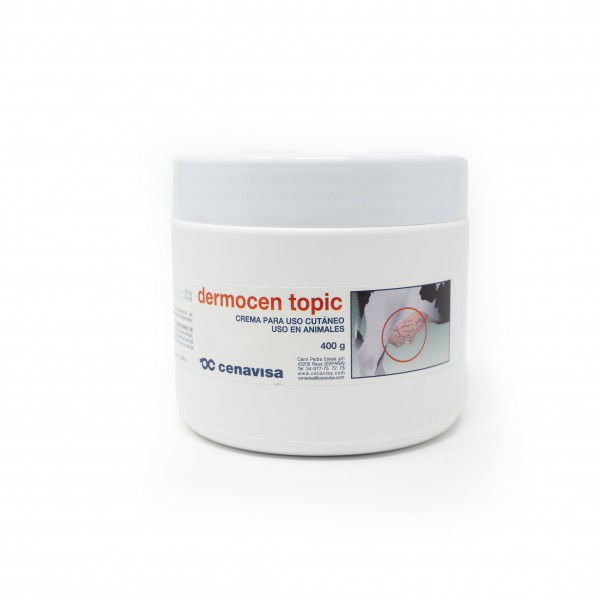
Composition per g.:
Camphor 20 mg
Methyl salicylate 25 mg
Azulene 0.2 mg
Extract of camomile 25 mg
Excipients, n.q.
POSOLOGY AND ADMINISTRATION VIA
Apply on the affected zone (2-3 times / day) and practice a soft massage to improve the product penetration. Rinse with water before milking to avoid residues in the teats.
Related products
Cenflox 200 mg/ml
COMPOSITION
Each ml contains:
Active Substance:
Enrofloxacin 200 mg
Excipients:
Potassium Hydroxide
Purified Water
INDICATIONS FOR USE
Treatment of infections caused by the following bacteria susceptible to enrofloxacin:
Chickens:
Mycoplasma gallisepticum,
Mycoplasma synoviae,
Avibacterium paragallinarum,
Pasteurella multocida,
Escherichia coli.
Turkeys:
Mycoplasma gallisepticum,
Mycoplasma synoviae,
Pasteurella multocida,
Escherichia coli.
Rabbits:
For the treatment infectious diseases due to Pasteurella multocida and bacterial enteritis due to infection with E.coli.
POSOLOGY AND ADMINISTRATION VIA
Administer in the drinking water. The dilution should be prepared daily before its administration.
Chickens and turkeys:
10 mg enrofloxacin/kg bodyweight per day for 3-5 consecutive days.
Treatment for 5 consecutive days in mixed infections and chronic forms. If no clinical improvement is achieved within 2-3 days, reconsider the therapy based on
susceptibility testing.
Rabbits:
10 mg of enrofloxacin/kg b.w./ day for 5 consecutive days.
Calculate the daily quantity (ml) of product as follows:
Total number of rabbits x Average body weight in kg x 0.05= Total volume (ml) per day
WITHDRAWAL PERIODS
Chickens: Meat and offal: 7 days.
Turkeys: Meat and offal: 13 days.
Rabbits: Meat and offal: 3 days.
Not authorized for use in birds producing eggs for human consumption.
Do not administer to layer replacement birds within 14 days of coming into lay.
Zoo Vet
Vitamin E & Selenium for Oral Administration
COMPOSITION: Each 1 litre contains
Sorbitol , Vitamin A Retinyl Palmitate , Vitamin E/dl-alpha-tocopheryl acetate , Selenium – Se
from sodium selenite , Citric acid monohydrate , Glyceryl polyethylene glycol ricinolate , Benzyl
alcohol , Phenol , Demineralized water
Importance:
Vitamin E is a fat-soluble intracellular antioxidant, involved in stabilizing unsatured fatty acids,
thereby preventing toxic lipo-peroxide formation. Vitamin E deficiency symptoms are similar to
that of Selenium deficiency symptoms
Vitamin E and Selenium are interrelated and function together as a part of multi-component
antioxidant defense system. Vitamin E + Selenium is used as prophylactic and treatment for
vitamin E deficiency especially that accompanied by selenium deficiency
Indication in poultry :
Vitamin E deficiencies (like encephalomalacia, muscular dystrophy, exudative diathesis, low egg
production, decreased hatchability in eggs, infertility problems) in poultry, calves, cattle, goats
and sheep.
Critical period of growth (weaning, transport, stress, summer).
Selenium is an essential nutrient for all animals/ birds.
Selenium is a component of the enzyme glutathione peroxidase, which plays an important role in
protection of cells by destroying oxidising agents such as hydrogen peroxide and lipid peroxides.
Hemorrhagic edema
Crazy chick disease
Muscular dystrophy, testicular degeneration
To improve fertility , hatchability , and egg production
Improve weight gain , FCR and general performance
Indication in Livestock:-
Treatment of infertility , habitual abortion
Oligospermia
Edema
Dosage and Administration: For oral administration -
Poultry: 1 ml per 15 liters of drinking water for 3-5 days
Chicks (less than 21 days): 1 ml per 8 liters of drinking water for 3-5 days
Foals, Calves, Goats and Sheep: 1 ml each 60 kg of body weight for 3-5 days
Horses, Camels, Buffalos and Adult Cattle: 1 ml each 80 kg of body weight for 3-5 days
Packing: Bottles of 18 x 500 ml per carton, bottles of 12 x 1 litre per carton; Can of 3 x 5 litre per
carton box
Storage: Keep tightly sealed, dry, cool and protected from direct sunlight. Opened packages
should be used promptly.
Origin : European , Made in Italy
Albecorin vacuno
COMPOSITION
Composition per ml:
Albendazole (micronized) 100 mg.
Excipients, n.q.
POSOLOGY AND ADMINISTRATION VIA
Ovine / caprine: Nematodes and cestodes: 0.5 ml / 10 kg bw in single dose. Fasciola: 0.75 ml / 10 kg bw in single dose. Dicrocoelium: 1-1.5 ml / 10 kg bw in single dose.
Cattle : Nematodes and cestodes: 0.75 ml / 10 kg bw in single dose. Trematodes: 1 ml / 10 kg bw in single dose.
Administer by oral via with a drenching gun.
WITHDRAWAL PERIODS
Meat: 14 days
Milk: 4 days
Marbocen 100 mg/ml
COMPOSITION
Each ml contains:
Active substance:
Marbofloxacin 100,0 mg
Excipients:
Metacresol 2,0 mg
Thioglycerol 1,0 mg
Disodium edetate 0,1 mg
Other excipients, q.s.
INDICATIONS FOR USE
Cattle:
Treatment of respiratory infections caused by strains of Histophilus somni, Mannheimia haemolytica, Mycoplasma bovis and Pasteurella multocida susceptible to marbofl oxacin.
Treatment of acute mastitis caused by strains of Escherichia coli susceptible to marbo. oxacin during the lactation period.
POSOLOGY AND ADMINISTRATION VIA
Cattle:
Respiratory infections: 2 ml product/25 kg BW in a single injection by intramuscular route. If the volume to be injected is more than 20 ml, it should be divided between two or more injection sites. In cases of respiratory infections
caused by Mycoplasma bovis: 1 ml product/50 kg BW, in a single daily injection for 3 to 5 consecutive days, by intramuscular or subcutaneous route. The first injection may be given by the intravenous route.
Acute mastitis: 1 ml product/50 kg BW in a single daily injection for 3 consecutive days by intramuscular or subcutaneous route. The first injection may also be given by the intravenous route.
WITHDRAWAL PERIODS
Cattle: 8 mg/kg in single injection (IM): Meat and offal: 3 days. Milk: 72 hours 2 mg/kg daily for 3 to 5 days (IV/SC/IM): Meat and offal: 6 days. Milk: 36 hours
Pigs (sows): Meat and offal: 4 days.